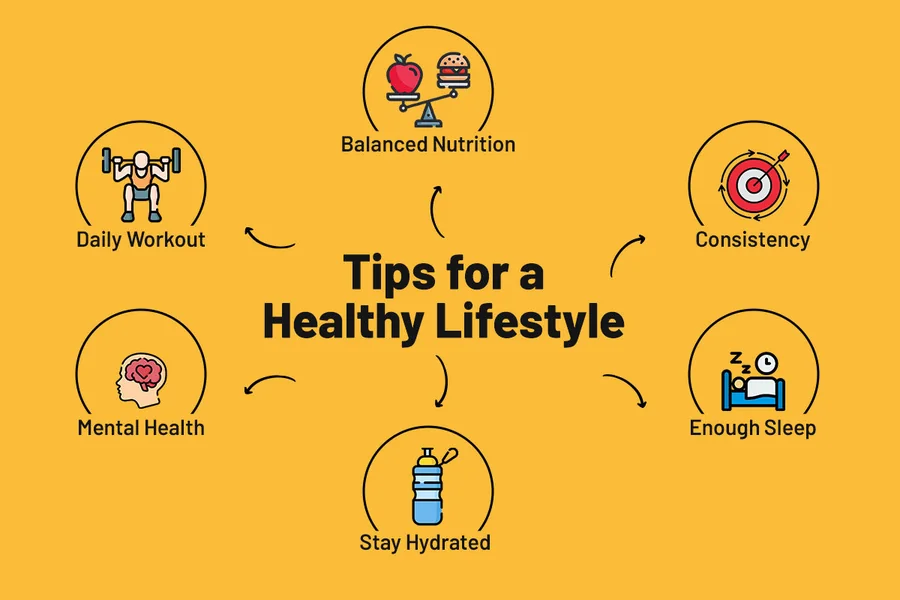
A healthy lifestyle is a habit that you follow over time that contributes to your physical, mental & emotional health. It involves balanced eating, regular exercise, good sleep, managing stress and having healthy relationships. A healthy lifestyle is not a quick weight loss diet or quick fitness craze. It’s a lifestyle that involves gradual and realistic changes. The goal is not perfection but consistency, building routines that fit naturally into your life so they last for years, not just weeks.
What Does a Healthy Lifestyle Actually Mean?
When most people think of health, they think of eating salads, going to the gym or eliminating sugar. A healthy lifestyle is more than this though. It’s about sleeping, stress management, connection with others, and the sustainability of good habits in times of busyness.
Most health advice is based around short spurts of motivation. You get a good beginning, then life gets in the way and the routine gets derailed. A healthy way of living is constructed differently. It is based on minor, repeating changes, not major ones.
Key elements of a lasting healthy lifestyle include:
- Consistent, balanced eating habits rather than strict diets
- Regular physical activity you actually enjoy
- Adequate, quality sleep
- Tools to manage stress before it builds up
- Strong social and emotional support
- Habits that adapt as your life changes
Start With Small, Sustainable Changes
Many people make the mistake of attempting to change too much at once. New workout plan, new diet, new sleep schedule – all beginning on a Monday! Can feel productive but is not very sustainable. It takes the body and the mind several days to adapt, and when too many changes are made in a short period of time, it can burn out within a couple of weeks.
Rather, choose one or two habits to work on first. It could be extra water intake per day or taking the 15 minute walk after dinner. When it becomes second nature, add another layer. This may seem like a slow way to do things, but it’s much more likely to last.
Confidence is also achieved through small changes. Every small victory builds confidence in ability to follow. These little victories add up to a whole new life over the course of months, without ever feeling like a radical change.
Build a Foundation With Nutrition
Food, it’s fuel, but it’s also one of the most misunderstood aspects of health. The extreme diets offer rapid outcomes but most people are not able to sustain this over the long haul. A better way to think about it is to think of balance instead of restriction.
This is not about counting calories and eliminating food groups. It involves taking care with the size of food, increased intake of whole foods, and making room for flexibility. A diet that isn’t fun to eat at all does not last long when you start to eat it.If it takes no place for fun, it doesn’t last long when it’s time to eat it.
A few practical habits worth adopting:
- Add a source of protein to most meals
- Keep fruits and vegetables visible and accessible at home
- Limit ultra-processed snacks, but don’t eliminate them completely
- Pay attention to hunger and fullness cues instead of rigid meal timing
Eating healthy does not require you to be perfect 100% of the time. It’s about making better decisions more often than not.
Make Movement Part of Your Routine
Working out doesn’t mean an hour at the gym five days a week. But that is one of the primary reasons why people leave. The most sustainable is to discover some physical activity you can fit into your schedule and which you don’t hate.
Any activity that counts as getting some form of exercise is considered movement.Movement can be walking, cycling, swimming, dancing or even doing housework. No, it is consistency that matters, not intensity. People who walk 30 minutes a day, 5 days per week will often notice a better long term benefit than those who workout hard 1-2 times a month and then go off for months.
For beginners, try to keep the sessions brief and short. Ten minutes is better than zero minutes, since you had to wait for an hour for a perfect window. As you become fitter, your capacity and motivation will increase.
Prioritize Sleep and Stress Management
When life gets busy, sleep is a luxury that is often given up, but sleep impacts nearly every aspect of health. Bad sleep affects your mood, ability to make decisions, appetite and even food intake. Even the best diet and exercise program will not be able to produce results if you’re not getting the rest that your body needs.
Try to keep a regular sleep schedule, even on weekends. Going to bed without screens and an overall peaceful and quiet environment can make a world of difference. It’s just as important to manage stress. Long-term stress increases cortisol levels, which can also impact digestion, sleep, and overall health.
Some basic stress-reduction strategies are:
- Deep breathing exercises for a few minutes each day
- Journaling to process thoughts before bed
- Setting boundaries around work hours
- Spending time outdoors, even briefly
These behaviors might be small, but they add up over time! Individuals who handle stress effectively also make good other health decisions.
Stay Consistent Through Life’s Changes
Things change in life, and so should your approach to health. Careers evolve, relationships evolve, desires evolve. Lifestyle that will last, is flexible enough to change without collapsing.
This means having a plan for setbacks. It’s not about what you did the day prior to a workout; it’s about the many weeks of progress you have made. The only thing that counts is getting back on track in a hurry, not viewing one slip as a complete failure. All-or-nothing thinking is a quickest way to give up healthy habits.
It’s also important to review your goals on a regular basis. A year ago, you may have done an event you find convenient and at this time you may not have the same schedule or needs. Connect with yourself, make changes to your habits, be realistic about what you can keep doing and continue the habits for the long haul.
Final Thought
Don’t strive for perfection or be on a trend to build a healthy lifestyle for a lifetime! It’s about forming good habits that become a natural part of your life that you can do even when you’re busy or stressed. Start slow, be consistent and allow for change because things change.
These little decisions, made over time, are cumulative and greater than a fleeting makeover. They become a way of life, and that’s what makes a healthy lifestyle enduring.