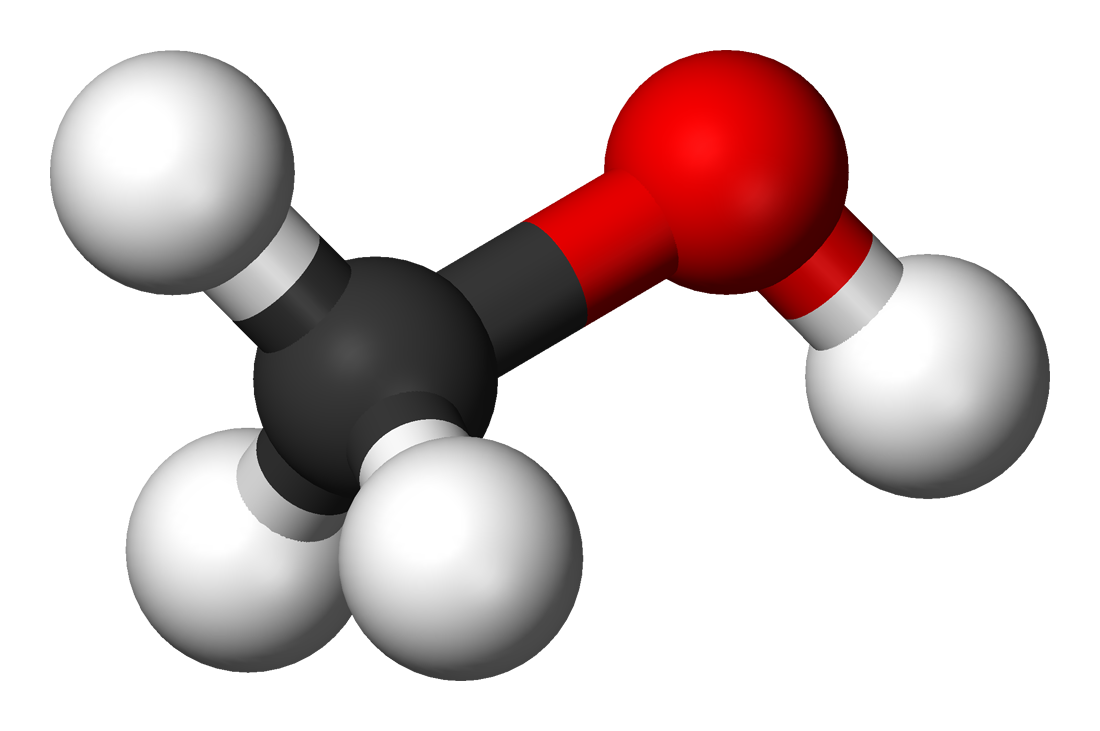
Chemistry homework has a way of turning a simple question into a long one. Take methanol, the smallest alcohol. You draw the structure, you count the bonds, and then you’re stuck on polarity. If you want a straight answer to is ch3oh polar, here it is: yes, methanol is a polar molecule, and the reasons are easy to follow once you look at its shape.
What CH3OH looks like
CH3OH is the formula for methanol, also called methyl alcohol or wood alcohol. The carbon atom sits in the middle, bonded to three hydrogen atoms and to one oxygen atom. The oxygen, in turn, is bonded to one more hydrogen, which forms the -OH group that gives alcohols their name.
Around the carbon, the four bonds spread out in a tetrahedral arrangement. Around the oxygen, the two bonded atoms and two lone pairs of electrons create a bent shape, a bit like the bend in a water molecule.
Why polarity happens
A molecule is polar when its electrons are shared unevenly and the molecule has a positive end and a negative end. Two things decide this: the electronegativity of the atoms, and the shape of the molecule.
Electronegativity measures how strongly an atom pulls on shared electrons. Oxygen scores about 3.5, carbon about 2.5 and hydrogen about 2.1. That means oxygen pulls much harder than its neighbours. The C-O bond and the O-H bond are both clearly polar, with electrons drifting toward the oxygen. The C-H bonds are only slightly polar, so they matter far less.
Putting the pieces together
In a symmetrical molecule like carbon dioxide, the polar bonds point in opposite directions and cancel out. Methanol isn’t symmetrical. The oxygen sits on one side with its lone pairs, and the bent shape around it means the pulls don’t cancel. They add up to a net dipole pointing toward the oxygen end. One side of the molecule ends up slightly negative, the other slightly positive.
That net dipole is the textbook definition of a polar molecule. Methanol’s dipole moment is about 1.7 debye, which is a solid value and a bit higher than many simple organic molecules.
What polarity does in real life
Polarity explains how methanol behaves. Because of the O-H group, methanol can form hydrogen bonds with other methanol molecules and with water. That’s why it mixes with water in any proportion, with no separation into layers. It’s also why methanol has a much higher boiling point, around 65 degrees Celsius, than methane, which is a gas at room temperature even though the two molecules are similar in size.
It also acts as a good solvent. The old rule of thumb “like dissolves like” applies here, so methanol dissolves many polar and ionic substances, such as salts and sugars. It can also dissolve some nonpolar materials a little, because the CH3 end of the molecule is nonpolar. That mix of a polar head and a small nonpolar tail makes it useful in laboratories and industry, from paint thinners to fuel additives.
A safety note is worth adding. Methanol is toxic if swallowed or inhaled in significant amounts, so it should only be handled with proper care and ventilation. Don’t confuse it with ethanol, the type of alcohol in drinks.
A quick method for any molecule
You can reuse the same steps for other molecules. First, draw the Lewis structure. Second, check which atoms are more electronegative and mark the direction of each bond’s pull. Third, look at the 3D shape. If the pulls cancel, the molecule is nonpolar. If they don’t, it’s polar. Water, ammonia and ethanol are polar. Methane, carbon dioxide and oxygen gas are nonpolar.
A common mistake is judging polarity by the formula alone. Two molecules can contain similar atoms and still behave differently because of shape, so always sketch the structure before deciding.
For more quick, clear answers to chemistry and science questions, a plain-language site like compairro.com can save time before an exam.
In short, methanol is polar because of its oxygen atom, its bent geometry and its hydrogen-bonding -OH group. If someone asks, you can answer with confidence and explain why.