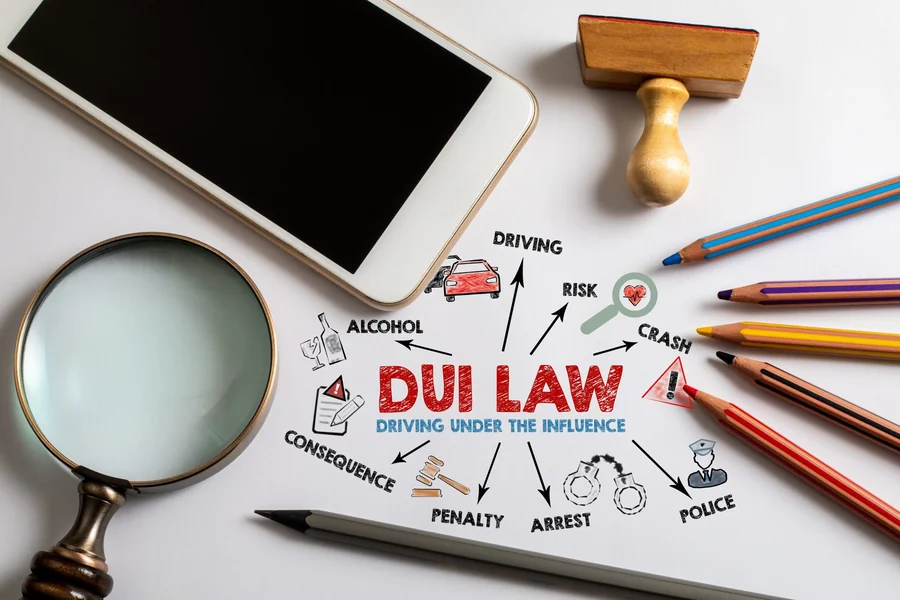
Driving Under the Influence (DUI) is the driving of a vehicle while intoxicated or on drugs, usually when the driver’s blood alcohol concentration (BAC) is at or above 0.08%. DUI is a serious criminal offense in most states with penalties that can include fines, license suspension and jail time. Knowing what the DUI laws are like would help you understand your rights, what you could get wrong and what to expect if you ever get pulled over or charged with DUI.
What Counts as a DUI
People think that DUI is only about drinking and driving, but it’s not. Anything that affects your judgment or ability to operate a vehicle safely can be considered a factor in your getting a DUI. This includes prescription medicines, recreational drugs and even some OTC medicines that make you drowsy.
These are some of the common reasons for a DUI charge:
- A driver’s blood alcohol concentration is greater than 21 legal limits of 0.08% for most states.
- Any alcohol in the system of the driver under 21 years of age, as detected under the “zero-tolerance” legislations for drunk driving by minors
- Commercial drivers with a CDL vehicle must not have a BAC of 0.04% or greater.
- If an officer observes visible impairment, even if below the legal BAC limit, then they will note this.
- Drug impairment (obtained from field sobriety tests or blood tests),
One should note that a breath test is not the only way to make an arrest. A driver’s demeanor, speech, or coordination may be enough to warrant a stop and an investigation into impairment.
The Traffic Stop and Arrest Process
The typical DUI case starts with a traffic stop. Perhaps you were weaving, going through a stop sign or over the speed limit. With each subsequent case involving impairment, an officer often finds he is repeating himself.
First, the officer is going to ask questions and watch you. They can tell you’re intoxicated when you wander off using slurred speech, smell the booze, or have bloodshot eyes. You then might be required to complete field sobriety tests, like walking in a straight line or standing on one foot. These tests are not foolproof, but provide officers with a basis for proceeding with additional testing.
The officer will probably ask you to submit to a chemical test of your breath if he or she thinks you are driving while intoxicated. You may also face consequences if you refuse to take this test as many states have “implied consent” laws. By getting a driver’s license, you’ve already agreed to submit to chemical testing if lawfully arrested for DUI. Denial can lead to a license suspension without having been convicted of the DUI.
After being arrested, you will be booked into police custody and your car may be towed. This is when things get real and this is also when many people make the mistake of talking with them without lawyers.
Penalties You Could Face
DUI penalties vary based on the BAC level, the type of offense (first offense vs. repeat offense) and if anyone was injured. However, there are trends that run common to most states.
The consequences of your first violation may be:
- Fines of several hundred to several thousand dollars.
- Several months license suspension
- Alcohol education or treatment programs – mandatory
- May be faced with jail time, but this is variable.
Higher car insurance rates for several years following.Higher car insurance rates for several years after.
Repeat offenses can quickly accumulate. A second or third DUI will result in even longer license suspension, ignition interlock devices and jail time. A third DUI is a felony in some states, and will have significant long-term ramifications such as employment and housing issues.
Penalties are even more severe if aggravating factors are present. The courts are likely to give harsher penalties if there was a child in the car, if the DUI caused an accident, or if the BAC was much higher than the legal limit. These cases will not be treated as lenient as other cases because there is a higher risk of harm.
What Happens in Court
Once you have been arrested, your case goes into the legal system. If you have never experienced this part before it can be a little confusing, so it is good to have a general idea of the steps involved in this part.
It typically begins with an arraignment, a formal charge and plea that you must make. Your lawyer (assuming you have one) can then negotiate with the prosecutor and ask for evidence or make motions challenging the traffic stop. Not all DUI cases are heard by juries. Indeed, many are settled via plea bargains, particularly if the offender is a first time offender with no aggravating factors.
If your case does go to trial, prosecutors need to prove impairment beyond a reasonable doubt. That’s where the accuracy of the breathalyzer, the reliability of the field sobriety test and the behavior of the officer frequently becomes questionable. A professional defense lawyer can discover flaws in the evidence’s collection, and this could result in a lesser charge or the case being dropped.
A conviction or plea agreement is followed by sentencing. Much of this is subjective and depends on the judge’s predispositions and the jurisdiction, as there is some degree of discretion in this area.
Long-Term Consequences Beyond the Courtroom
Being convicted of a DUI goes beyond the loss of your wallet or your driving privileges. Can follow you for years in ways that people might not expect.
One aspect that is frequently overlooked is employment. A clean driving record is a necessity for many jobs, particularly those that involve driving. A DUI conviction can be discovered during a background check, and this might make an employer hesitate in areas beyond driving, such as the education or healthcare professions or finance.
Another permanent legacy is insurance expenses. Insurers generally consider you to be a high-risk driver after a DUI. You will likely pay much more during the 3-5 years (or longer) that this label remains in effect.
Then there’s the personal side too. A DUI can put a strain on relationships, result in stress and anxiety, or cause a person to feel shame. For many, the emotional toll of a DUI charge can be just as hard to handle as the legal and financial burden.
How to Protect Yourself If Charged
Dealing with a DUI charge means that your decisions at the outset are significant. It is vital to remain calm and cooperative when being arrested, but not to waive one’s rights.
- Consider these steps:
- Don’t provide any more information than is required for identification.
- Call a DUI Lawyer as early as you can – preferably before the arraignment.
- Ask for records of your arrest, like dashcam or bodycam videos
- Show up to all court dates – don’t miss them and risk further charges for missing them
- Comply with license suspension terms to avoid further penalties
It helps to have an experienced lawyer. They know how to convince the court of any tendencies, how to discredit weak evidence and in some cases be able to negotiate for the reduction of charges. Although not all cases are dismissed, it is advisable to be guided by the right lawyer to get a better deal.
Final Thought
DUI laws are designed to make the roads safer; however, the judicial system that once you find yourself in can be overwhelming, particularly if it is your first time. By knowing what happens at each stage and the possible outcomes at court, you can be better prepared to understand what to expect and how to react.
When facing a DUI charge, don’t go through it alone. It’s an important consideration to have your legal counsel discuss your situation early and it’s important to understand your rights before you protect your future.