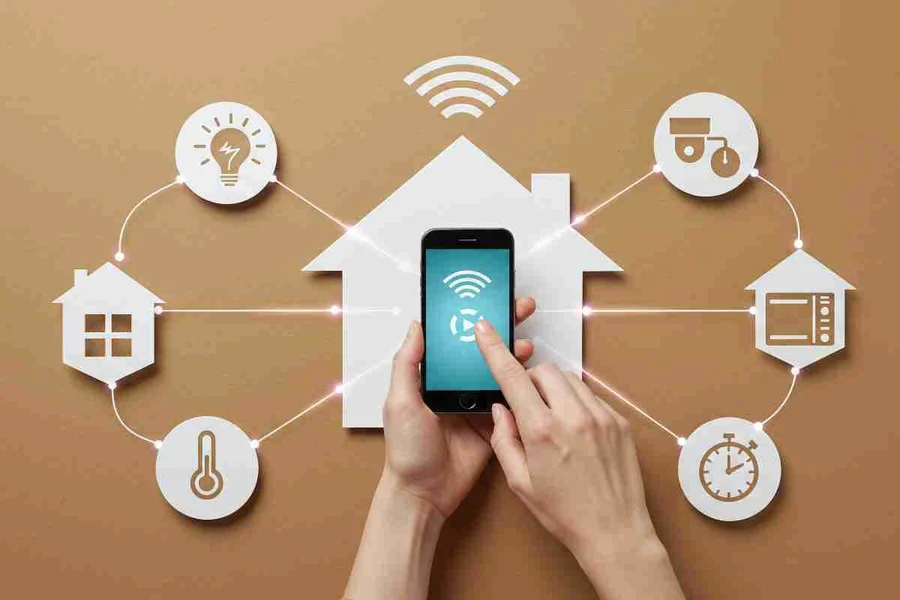
Smart home upgrades are devices that automate everyday tasks — heating, lighting, water use — to cut down on wasted energy and lower monthly bills. Think smart thermostats, LED bulbs, smart plugs & leak sensors. Instead of relying on you to remember to turn things off, these tools handle it on their own, often using your daily patterns to decide when to act. Costs vary by device, but most homeowners recover their investment within one to three years.
Why These Upgrades Actually Save Money
There’s a common misconception that smart home tech is mostly a convenience play. It’s not — not entirely, anyway. The real payoff shows up on your utility bill, and it comes from targeting waste you’d never notice on your own.
You don’t see the extra electricity a space heater burns through in a room nobody’s in. A smart plug does. You don’t think about the AC running full blast while you’re at work. A smart thermostat catches that and adjusts without being asked.
A few reasons these upgrades tend to work well for most households:
- They cut down on manual effort — savings happen in the background
- Most connect to an app, so you can actually see where energy is going
- Installation is usually simple; most work with your home’s existing wiring
- Utility companies frequently offer rebates that offset the upfront cost
Start With a Smart Thermostat
If you only make one change, make it this one. Heating and cooling eat up more of a typical energy bill than almost anything else in the house, which is exactly why this device tends to deliver the fastest results.
Nest and Ecobee are the two names people mention most often, and for good reason. Give either one a couple of weeks, and it starts learning your routine — when you’re home, when you’re asleep, when the house sits empty. From there, it builds a schedule on its own. You can also override it remotely, which comes in handy when your plans change last minute.
Expect to pay somewhere between $130 and $250. Rebates from local utility providers often knock a good chunk off that price. Most people notice a difference in their bill within the first billing cycle or two.
Lighting and Plugs Matter More Than You’d Think
Lighting isn’t the biggest energy drain in a house, but it runs constantly, and that adds up in a different way than heating or cooling does. A light left on in an empty room for eight hours costs you something every single day it happens.
Smart LED bulbs solve part of this. They use a fraction of the energy incandescent bulbs do, and pairing them with scheduling or motion sensors means you’re not relying on memory to turn them off.
Smart plugs tackle a different problem: phantom load. That’s the electricity your TV, game console, or phone charger pulls even when it’s technically off. It sounds minor, but in a house full of electronics, it’s rarely as small as people expect. A smart plug with an auto-shutoff schedule takes care of it without you having to think twice.
Don’t Overlook Water
Water bills get less attention in these conversations, but they shouldn’t. A leak you don’t catch right away can turn into a repair bill that dwarfs anything you’d spend on lighting or heating.
Leak detectors are small sensors you place near water heaters, washing machines, or under sinks — anywhere a slow leak might start unnoticed. The moment they sense moisture, they send an alert to your phone. Given how often water damage shows up as one of the costliest home insurance claims, this device can pay for itself the first time it does its job.
If you’ve got a yard, a smart sprinkler controller is worth a look too. Instead of watering on a fixed timer regardless of whether it rained yesterday, it checks weather and soil conditions first. Over a full summer, that alone can noticeably lower an outdoor water bill.
See Where Your Energy Actually Goes
It’s hard to fix what you can’t see, and this is where energy monitors earn their keep. Devices like Sense or Emporia Vue connect to your electrical panel and break down usage by appliance or circuit, in real time.
The interesting part isn’t the data itself — it’s what people do once they see it. Homeowners who realize their old refrigerator is quietly costing them $30 a month tend to replace it sooner rather than later. That kind of visibility changes habits in a way that a utility bill, arriving weeks after the fact, never really does.
It’s also a good way to catch aging appliances before they fail. A unit pulling more power than it used to is often a sign something’s wearing out.
Security Upgrades With a Financial Upside
Security devices aren’t usually pitched as money-savers, but a lot of them do double duty. Smart locks, cameras, and video doorbells often tie into the same automation system running your thermostat and lights.
Some setups will turn off the lights and adjust the temperature the moment your smart lock registers that you’ve left. Others just let you check in from your phone, which cuts down on the instinct to leave the lights on “just in case” someone’s home.
There’s a secondary benefit too — plenty of insurance providers offer discounts for monitored security systems. It’s not going to outweigh the savings from a thermostat upgrade, but if you’re already looking into security, it’s worth factoring in.
Final Thought
You don’t need to overhaul your entire house at once. Start with a smart thermostat, since it tends to pay for itself the fastest, then build from there — lighting, leak detection, energy monitoring — as your budget allows.
What makes these upgrades worthwhile isn’t any single device. It’s that they work without you having to remember them. No more mental checklist of switches to flip before bed. They just handle it.
If you’re not sure where to begin, pull up your last few utility bills and see where the money’s actually going. That’s usually the clearest signal for which upgrade to tackle first.